Exclusive products thanks to manual work

Family tradition since 1921

Burnt in Germany


The myths surrounding fruit brandies are still around. A fruit brandy has to burn, it is best drunk ice cold and it is only made from cheap fruit anyway. Far from it. Emil Scheibel distillery dispels the 10 most common myths about fruit brandy:
The same applies to fruit brandies: only those who put good things into it will get good things out of it. That's why our quality control starts with the fruit we buy. In fact, the external appearance of the fruit plays a rather subordinate role, as the internal properties, such as the fruit sugar content or the distillation properties of the fruit, are much more important to us.
A fruit brandy should definitely not burn or taste sharp, because then the pre-distillation and after-distillation have not been cleanly separated from the so-called heart. A good fruit brandy has a mild fruitiness and is pleasantly warming, which also applies to high-proof products such as our Alte Zeit 56% Acher-Kirsch.
That's not quite true, there are small, subtle differences: for a fruit brandy or fruit water, the fruit is mashed and distilled twice. First the raw spirit, then the fine spirit. The term brandy is used when pome fruit such as pears or apples are used, while stone fruit such as cherries are distilled in water. Low-sugar fruits, such as raspberries, are not mashed but soaked in alcohol for several days. Here they gradually release their aromas and flavor into the alcohol - their spirit. The so-called macerate is later simply distilled and is then called spirit.
Basically, storage is an important step in the production process, as this is where the distillates come to rest, become milder and, depending on the storage method, can also develop new aromas. Cherry brandy can be stored for years without any problems, the product becomes somewhat milder in taste but still remains aromatic. Other distillates such as Williams should not be stored for too long, as the fine fruit aromas of the Williams pear can evaporate over time.
Definitely not cold, but cool - because you don't want to freeze the aromas. The ideal drinking temperature for most brandies is therefore 15-18°C. If you have a wine cabinet, you can store the brandies in it, for example, which is ideal. In summer, you can also put the bottles in the fridge. If you pour 2-4 cl into a glass and wait a moment, the product will quickly reach the perfect drinking temperature.
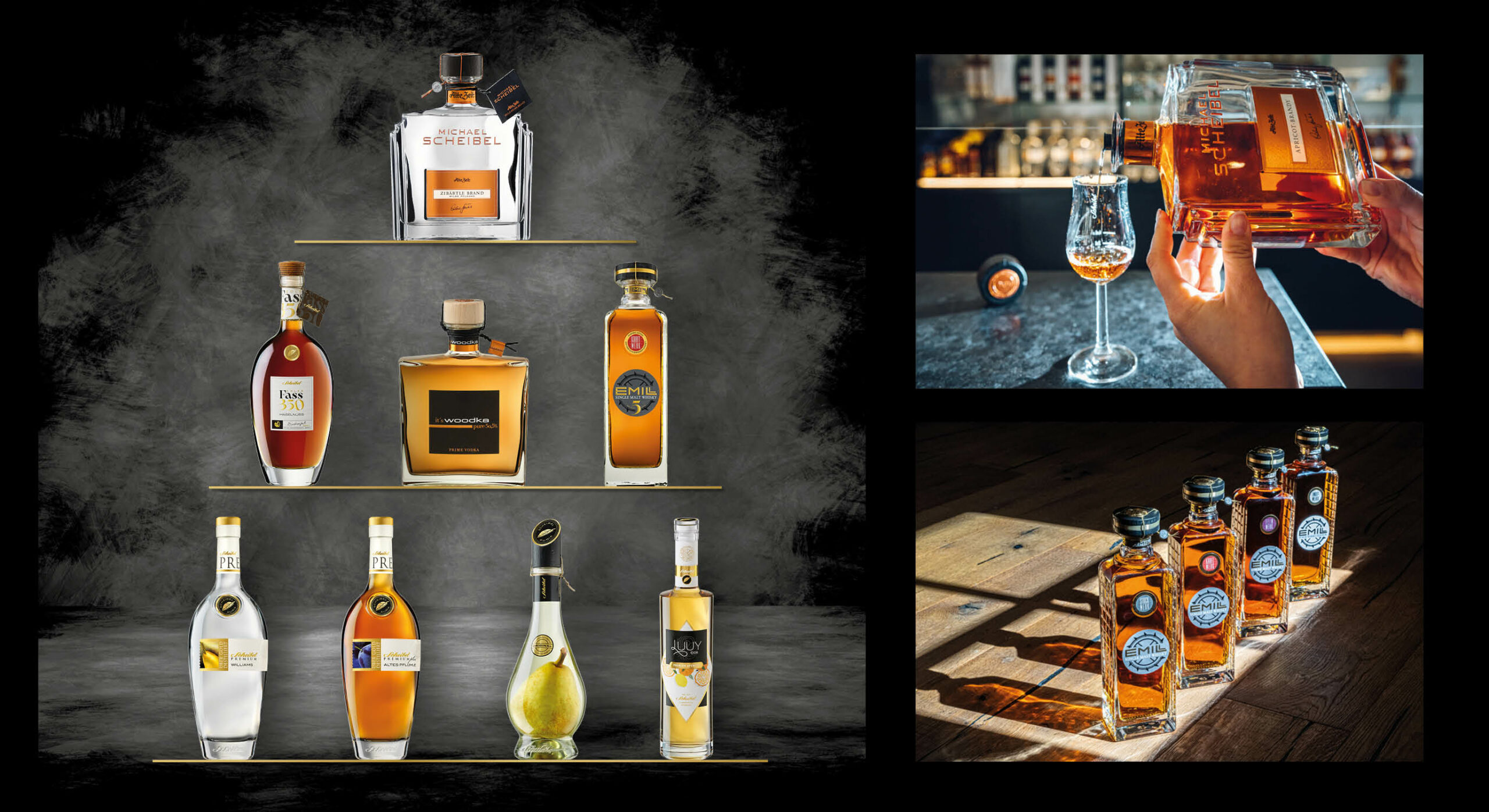
Not at all! Producers' product ranges have expanded to include many different fruit brandy varieties and consumers now have an incredibly wide selection of brandies to choose from alongside classics such as Kirsch or Williams. Not only different fruits, but also new processes such as storage in barrels create exciting products with a modern touch. In terms of aroma, there is much more to discover in fruit brandies than in other types of spirits, a good example being the Scheibel PREMIUMplus Moor-Birne or our PREMIUM Kamin-Kirsch.
The drinking culture has changed. Whereas in the past, "schnapps" was typically drunk as a "nightcap" after a meal or with a supposedly medicinal background, today the focus is on enjoyment. People like to take the time to discover and enjoy the products.
Once upon a time. Due to the change in drinking culture, the thick-walled glasses have now given way to thin-walled aroma glasses, as the fine fruit aromas can develop better in them. For example, our all-rounder, the aroma glass, or the beautiful, mouth-blown spirit glasses.
A fine fruit brandy after a meal is the perfect end to a menu. But have you ever accompanied a menu with fruit brandies? If a chef puts so much thought into the harmony of the individual ingredients on the plate and puts together a menu, then the idea should be continued in the glass. Fine brandies in particular offer a particularly broad spectrum of aromas, making them the perfect accompaniment to a meal.
Where it says Black Forest kirsch on the label, it definitely contains Black Forest kirsch. This is because it is a legally protected designation of origin. Not only must the cherries come from the Black Forest or the surrounding area, such as Ortenau, but the distillery itself must also be based in the Black Forest and produce the product there. A minimum content of 40% by volume is prescribed and the addition of sugar is prohibited. Only if the product meets these requirements can the bottle actually say Black Forest kirsch.





 Opening hours
Gold Distillery Monday-Friday: 8 am - 5 pm Saturday: 10 am - 1 pm Closed on Sundays & public holidays Scheibel Whisky Mill Friday: 1 pm - 5 pm Saturday: 10 am - 1 pm Closed on Sundays & public holidays
Please note special opening hours (start page)!