Exclusive products thanks to manual work

Family tradition since 1921

Burnt in Germany


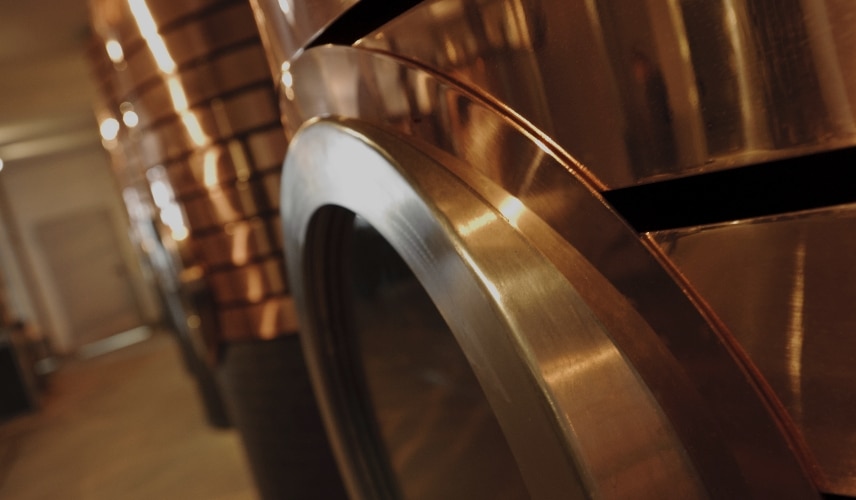
The basic principle is the same today as it was a hundred years ago. For the production of fine brandies, carefully selected fruit of optimum ripeness is processed into mash. The natural fruit sugar is converted into alcohol by the yeast, which takes around 2-3 weeks in a chilled fermentation process. The fruit mash is then heated in the still until the alcohol evaporates at 79 °C. The alcohol vapor passes through the booster columns into the cooler, where it condenses again and is finally available as a finished distillate. The whole process takes place in copper boilers, then as now. This is because copper is not only an ideal heat conductor, it is also easy to process and ensures the necessary reactions in the alcohol vapor.
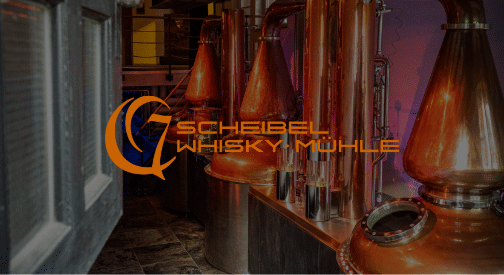
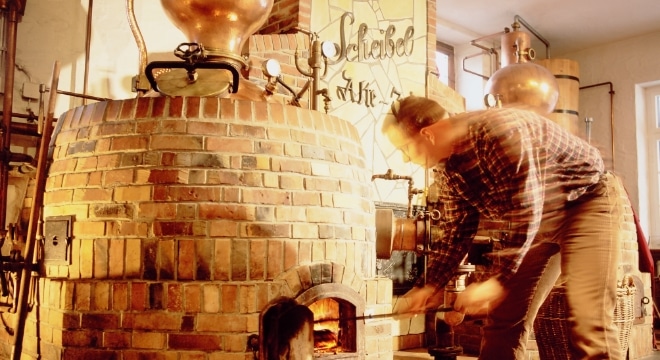
The 'Alte Zeit' distillery was built by Scheibel as an ode to the beautiful and ancient craft of traditional distilling based on old construction drawings and was put into operation in 1990. It is the counterpart to our modern distillery 'neue zeit' and consists of two stills, each with a capacity of 320 liters. One for the raw spirit, the other for the fine spirit. The small, brick-built stills, which are surrounded by a water bath, are fired with wood, just as they were a hundred years ago. "Every fire has a kind of life of its own and the trick is to keep it in check and keep it burning when necessary. If you succeed, you are rewarded with a wonderful result," enthuses Michael Scheibel. "As far as I know, we are the only commercial distillery in Germany that still produces brandies in this way. And this is certainly also due to the fact that the process takes considerably more time and is more complex than modern distillation techniques."
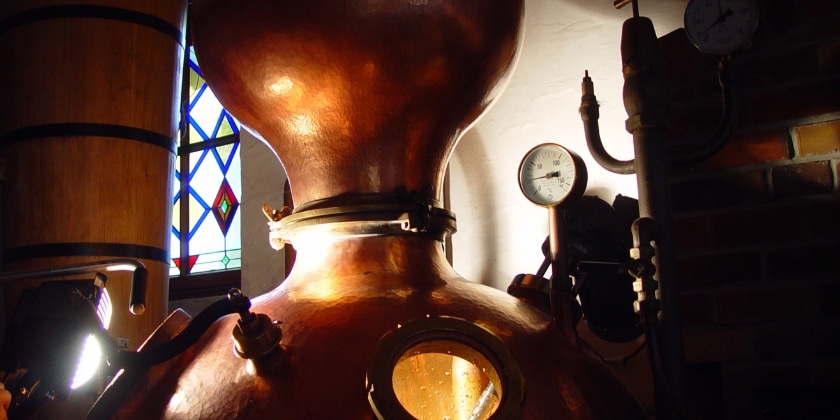
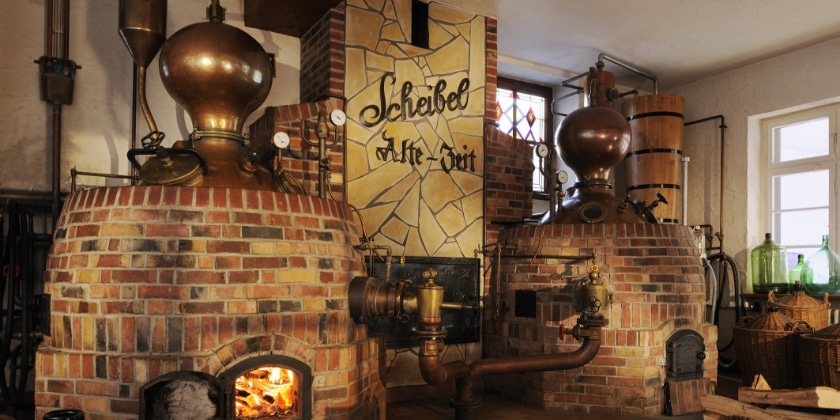
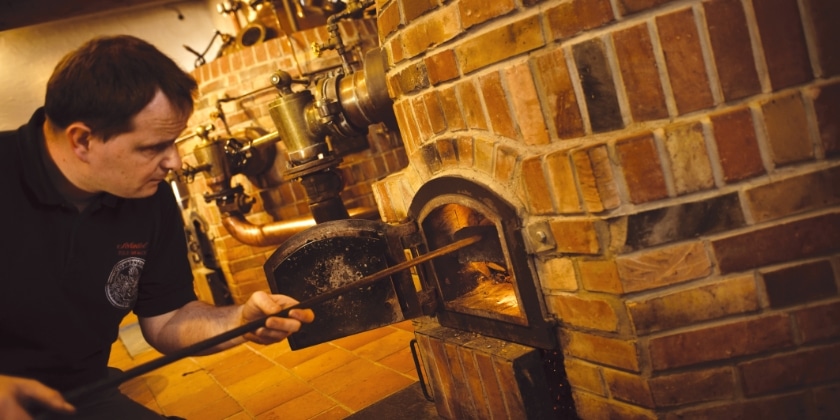
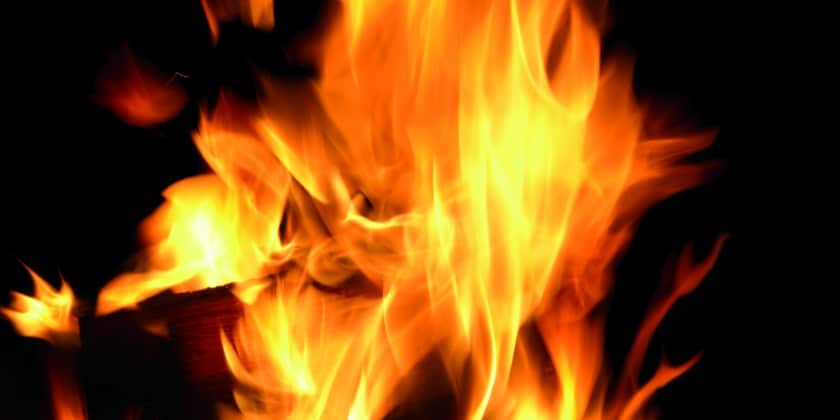
Whether wild raspberries from the Carpathian Mountains, Zibärtle from orchards in the Ortenau region or mirabelle plums from Nancy, rare, rare fruits form the basis for the characterful distillates of the 'Alte Zeit'. Fermentation is followed by slow and gentle distillation over a wood fire, always distilled twice. First the raw spirit, then the fine spirit. "The raw spirit is not processed directly, we store it for up to four weeks. Only then does the second distillation process take place," explains Michael Scheibel.
The fine brandy of the 'Alte Zeit' is given the finishing touches during storage. This is where the brandies come to rest and can develop their full aroma. An unusually long maturation period favors the development of the aromas, which are unique in taste and aftertaste. "It is never possible to say in advance exactly how long a brandy needs to be stored, because every distillate is different. Time is also of the essence here, you should never be impatient," says Scheibel. "Ultimately, however, the perfect interplay of fruit, production and storage, i.e. the DNA of the brandy, is decisive for the end result."
In the case of water or brandy, sugar-rich fruit is processed into mash and distilled twice in the still after fermentation is complete. First as a raw spirit and in the second run as a fine spirit. If these are pome fruits such as pears or quinces, the finished distillate is referred to as brandy, while the term water is used for stone fruits such as cherries.
A spirit, on the other hand, is made from low-sugar fruits such as raspberries. As they do not produce enough alcohol when fermented in profitable quantities, they are soaked in alcohol, which is called maceration. Over time, the fruit releases its aroma into the alcohol and the macerate is then simply distilled in the still.
To make liqueurs, the individual ingredients are mixed together in the right quantities and proportions, but above all in the right order, just like in a cocktail recipe.

Head distiller distillery
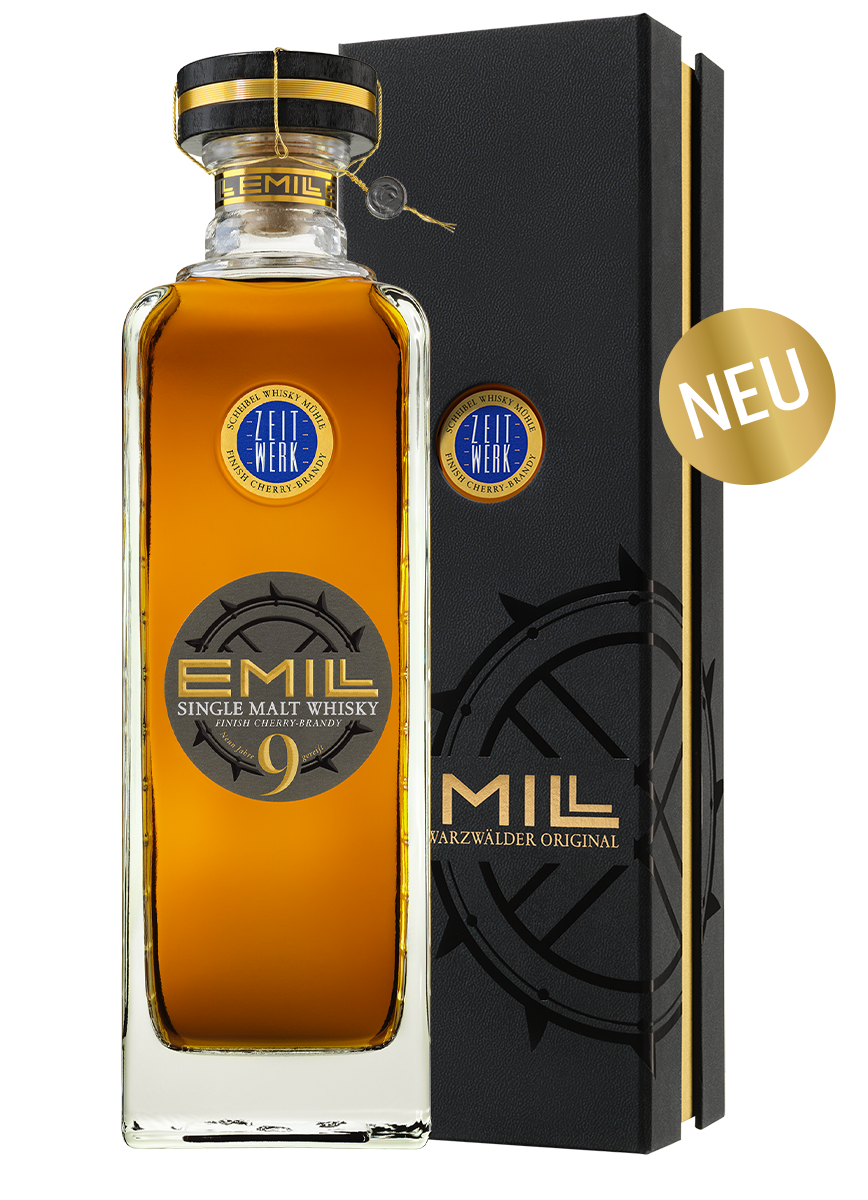
MY FAVORITE PRODUCTThe EMILL ZEITWERK is particularly close to my heart. It always fascinates me how it has reached such depth and maturity after "only" 9 years. When I smell the glass, I imagine I'm sitting in a quiet lounge - everything around me fades away and I can concentrate fully on this moment of enjoyment. On the tongue, this whisky is a dream: soft, warm and round, with a gentle yet present note of sweet cherry compote, complemented by a slight smokiness. This is exactly what gives it a uniqueness that makes it my personal favorite. This whisky is perfect at any time of day and for any occasion - whether in a social gathering with friends or in private, as a relaxing end to a long day. For me, the only thing that matters is that the connoisseur is prepared to put everything else aside at that moment and get involved with this special whisky. I recommend it with full conviction to anyone who really appreciates a good whisky and likes to embark on a journey of discovery in a glass.

Team leader distillery
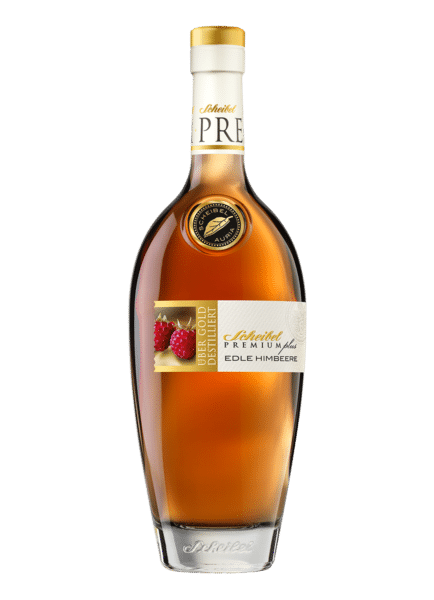
MY FAVORITE PRODUCTMy favorite at the moment is PREMIUMplus Noble Raspberry. The product tastes fruity like raspberry with a slight acidity and a persistent aroma. You don't need a special occasion to enjoy this product. Noble Raspberry is a great way to round off a meal, but I also enjoy drinking a glass with friends or on the terrace in the evening to round off the evening. A great product, the fresh raspberry has a wonderful aroma and taste.

Distiller distillery
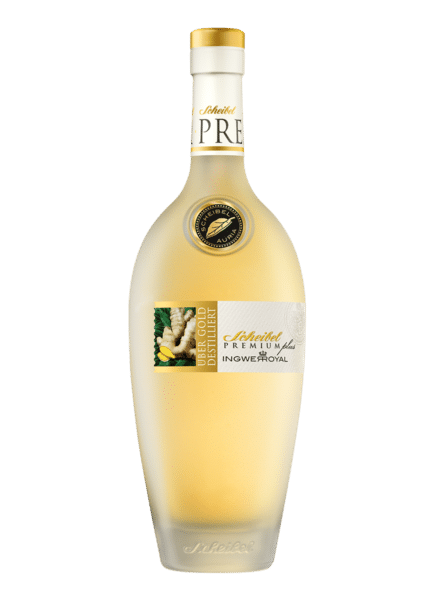
MY FAVORITE PRODUCTDer Ingwer-Royal begeistert mich mit seiner angenehmen Frische und der feinen Schärfe, die wunderbar belebt. Gut gekühlt entfaltet diese Spirituose für mich ihren ganzen Charakter – modern, überraschend und perfekt für alle, die abseits klassischer Fruchtspirituosen oder bitterer Aperitifs etwas Besonderes entdecken möchten.

Distiller distillery
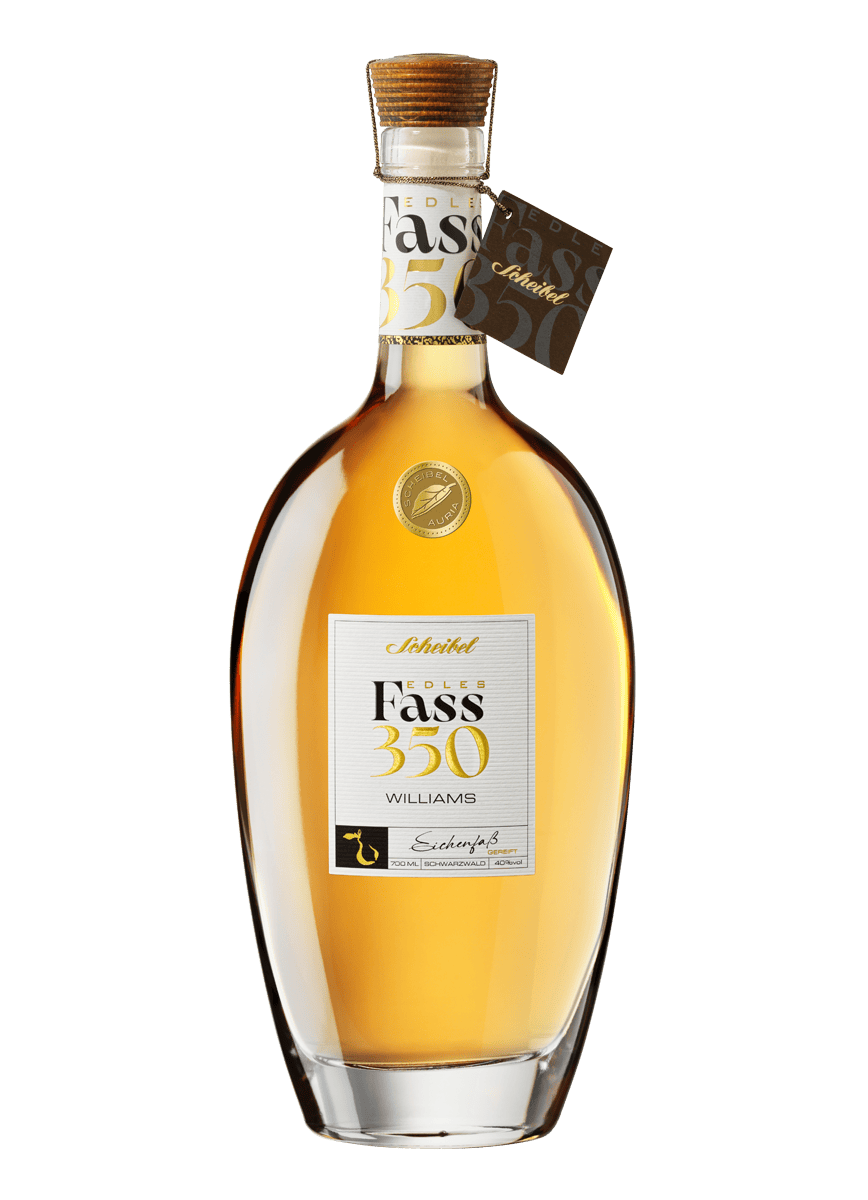
MY FAVORITE PRODUCTThe products in the Edle Fass 350 series are already my favorites in the range, but the Williams stands out for me. The wonderfully fresh pear aroma is rounded off by the wooden barrel ageing and the result is a perfect harmony of fruity Williams and gentle wood notes. Especially when I walk past the barrels in the cellar at work, I look forward to a delicious glass at the weekend. A cheese evening in our house only begins when a bottle of Edles Fass Williams is on the table, because it goes perfectly with tart, nutty cheeses. I recommend all Williams lovers to try our Premium Williams and Edles Fass Williams side by side. You are guaranteed to recognize the difference blindfolded and perhaps you will be as enthusiastic about it as I am. Cheers!
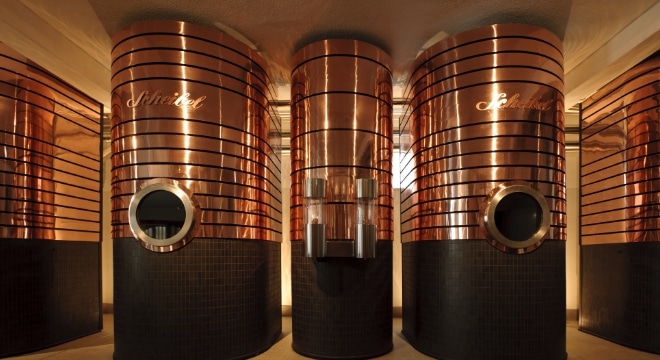
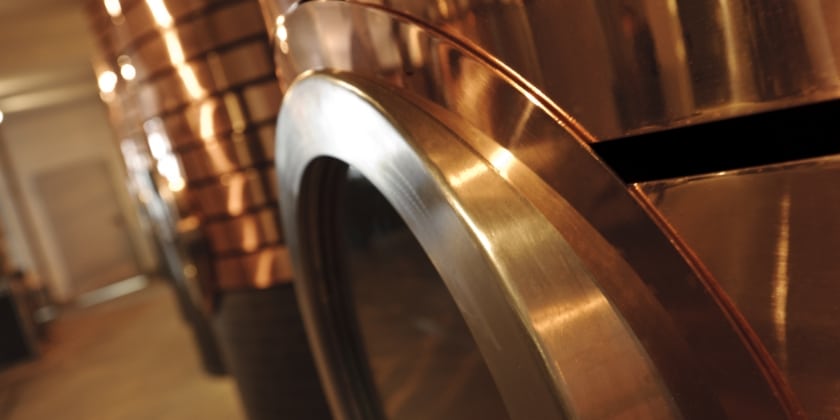
As a counterpart to the 'Alte Zeit' distillery , in which Scheibel still distils over a wood fire as it did a hundred years ago, the 'neue zeit' distillery was developed by a designer especially for Scheibel and symbolizes the company's innovative strength with its modern style. The plant was put into operation in 2009 and consists of a total of five stills, two for spirits and three for brandy and water.
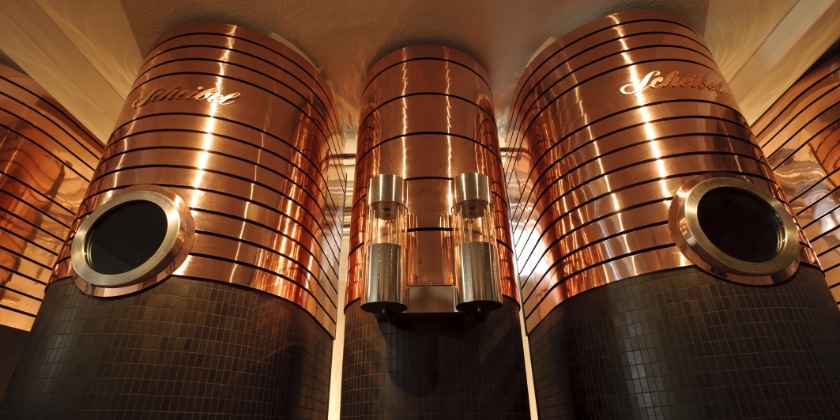
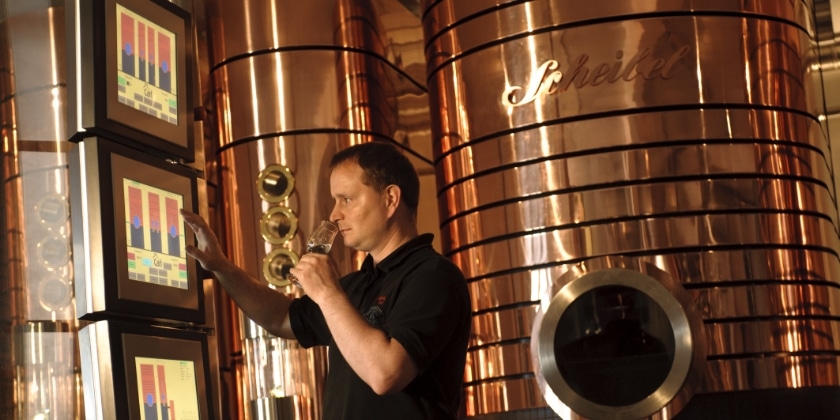
The stills in the 'new era' are operated via touchscreens and the production process can be closely monitored on screens. "As even the smallest differences in temperature can have an impact on the distillate, we use sophisticated technology to ensure the consistently high quality of our products," says Michael Scheibel.
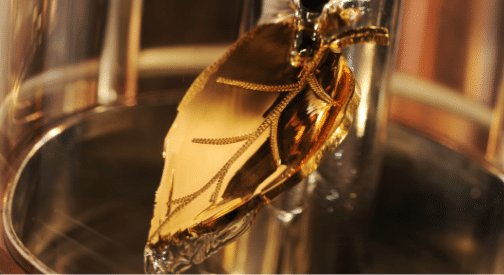
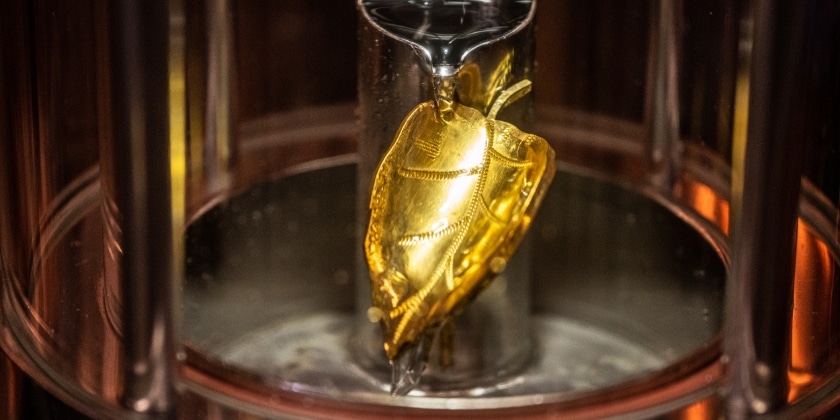
The 22-carat gold plates in the booster columns form the heart of the system. Sulphur, acid and fats produced during distillation are captured by the gold and therefore do not pass into the distillate - known as the Scheibel AURIA process. These gold plates are replaced and reprocessed three times a year.
A 22-carat gold leaf welcomes the finished distillates into the world and shows visitors to the distillery what happens inside the plant. "Can you taste the refinement with gold? Everyone has to decide for themselves. We are convinced that it makes the products more delicate, milder and more multi-faceted and that they taste different to other fruit brandies," confirms Scheibel.
In the case of water or brandy, sugar-rich fruit is processed into mash and distilled twice in the still after fermentation is complete. First as a raw spirit and in the second run as a fine spirit. If these are pome fruits such as pears or quinces, the finished distillate is referred to as brandy, while the term water is used for stone fruits such as cherries.
A spirit, on the other hand, is made from low-sugar fruits such as raspberries. As they do not produce enough alcohol when fermented in profitable quantities, they are soaked in alcohol, which is called maceration. Over time, the fruit releases its aroma into the alcohol and the macerate is then simply distilled in the still.
To make liqueurs, the individual ingredients are mixed together in the right quantities and proportions, but above all in the right order, just like in a cocktail recipe.
Head distiller distillery
MY FAVORITE PRODUCTThe EMILL ZEITWERK is particularly close to my heart. It always fascinates me how it has reached such depth and maturity after "only" 9 years. When I smell the glass, I imagine I'm sitting in a quiet lounge - everything around me fades away and I can concentrate fully on this moment of enjoyment. On the tongue, this whisky is a dream: soft, warm and round, with a gentle yet present note of sweet cherry compote, complemented by a slight smokiness. This is exactly what gives it a uniqueness that makes it my personal favorite. This whisky is perfect at any time of day and for any occasion - whether in a social gathering with friends or in private, as a relaxing end to a long day. For me, the only thing that matters is that the connoisseur is prepared to put everything else aside at that moment and get involved with this special whisky. I recommend it with full conviction to anyone who really appreciates a good whisky and likes to embark on a journey of discovery in a glass.
Team leader distillery
MY FAVORITE PRODUCTMy favorite at the moment is PREMIUMplus Noble Raspberry. The product tastes fruity like raspberry with a slight acidity and a persistent aroma. You don't need a special occasion to enjoy this product. Noble Raspberry is a great way to round off a meal, but I also enjoy drinking a glass with friends or on the terrace in the evening to round off the evening. A great product, the fresh raspberry has a wonderful aroma and taste.
Distiller distillery
MY FAVORITE PRODUCTDer Ingwer-Royal begeistert mich mit seiner angenehmen Frische und der feinen Schärfe, die wunderbar belebt. Gut gekühlt entfaltet diese Spirituose für mich ihren ganzen Charakter – modern, überraschend und perfekt für alle, die abseits klassischer Fruchtspirituosen oder bitterer Aperitifs etwas Besonderes entdecken möchten.
Distiller distillery
MY FAVORITE PRODUCTThe products in the Edle Fass 350 series are already my favorites in the range, but the Williams stands out for me. The wonderfully fresh pear aroma is rounded off by the wooden barrel ageing and the result is a perfect harmony of fruity Williams and gentle wood notes. Especially when I walk past the barrels in the cellar at work, I look forward to a delicious glass at the weekend. A cheese evening in our house only begins when a bottle of Edles Fass Williams is on the table, because it goes perfectly with tart, nutty cheeses. I recommend all Williams lovers to try our Premium Williams and Edles Fass Williams side by side. You are guaranteed to recognize the difference blindfolded and perhaps you will be as enthusiastic about it as I am. Cheers!
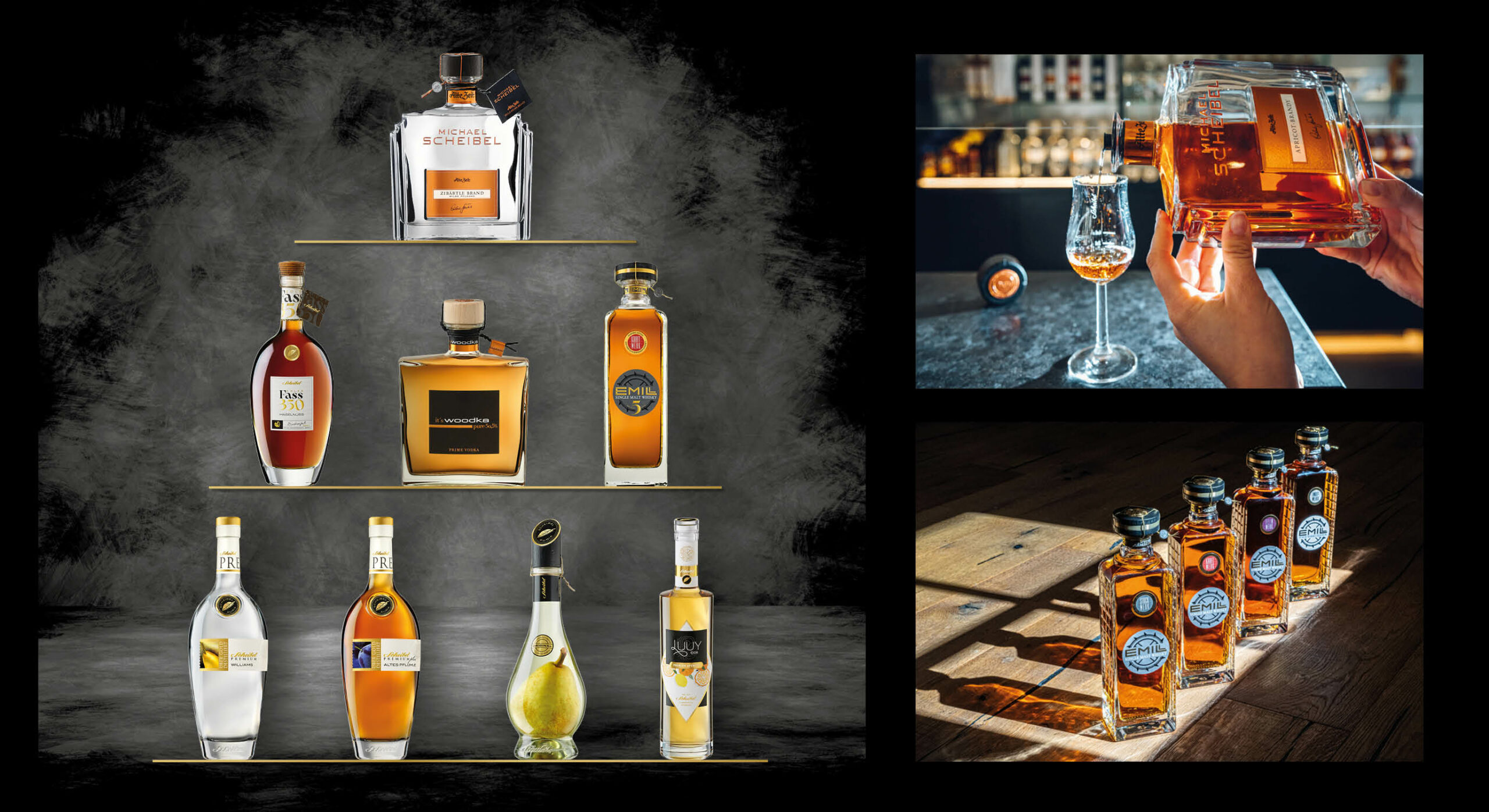
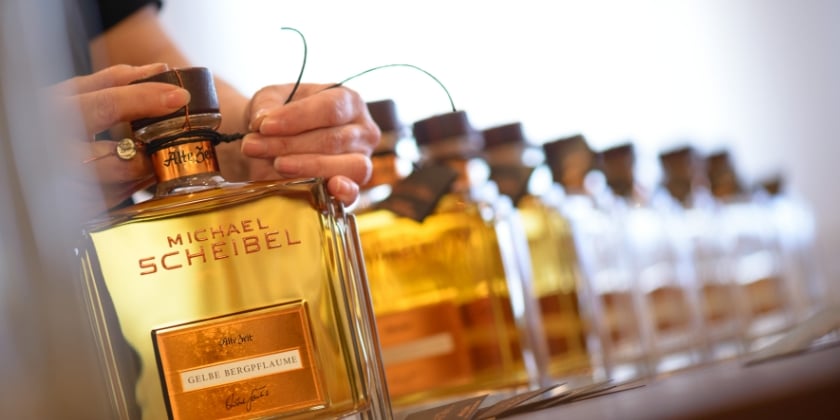
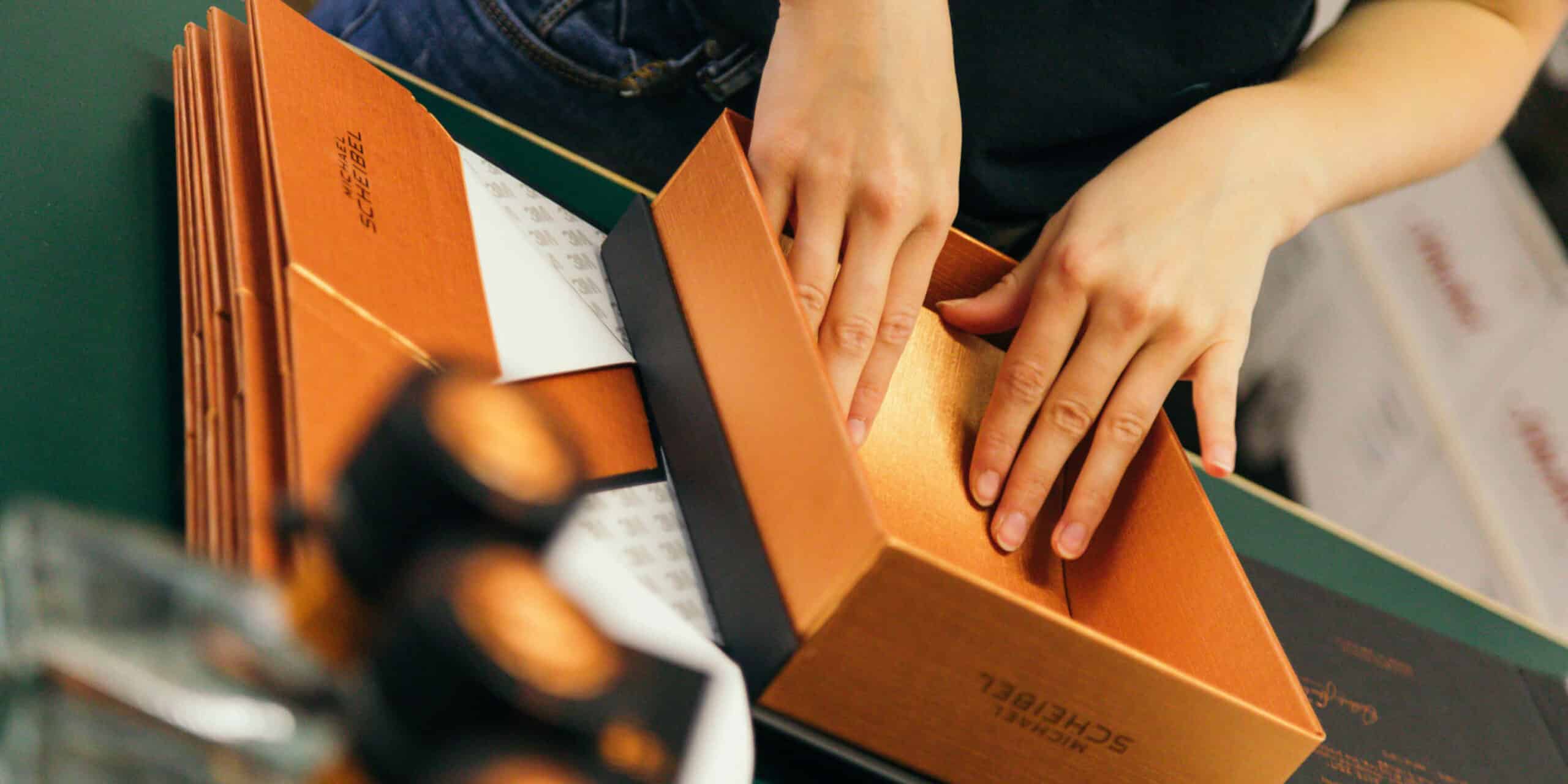
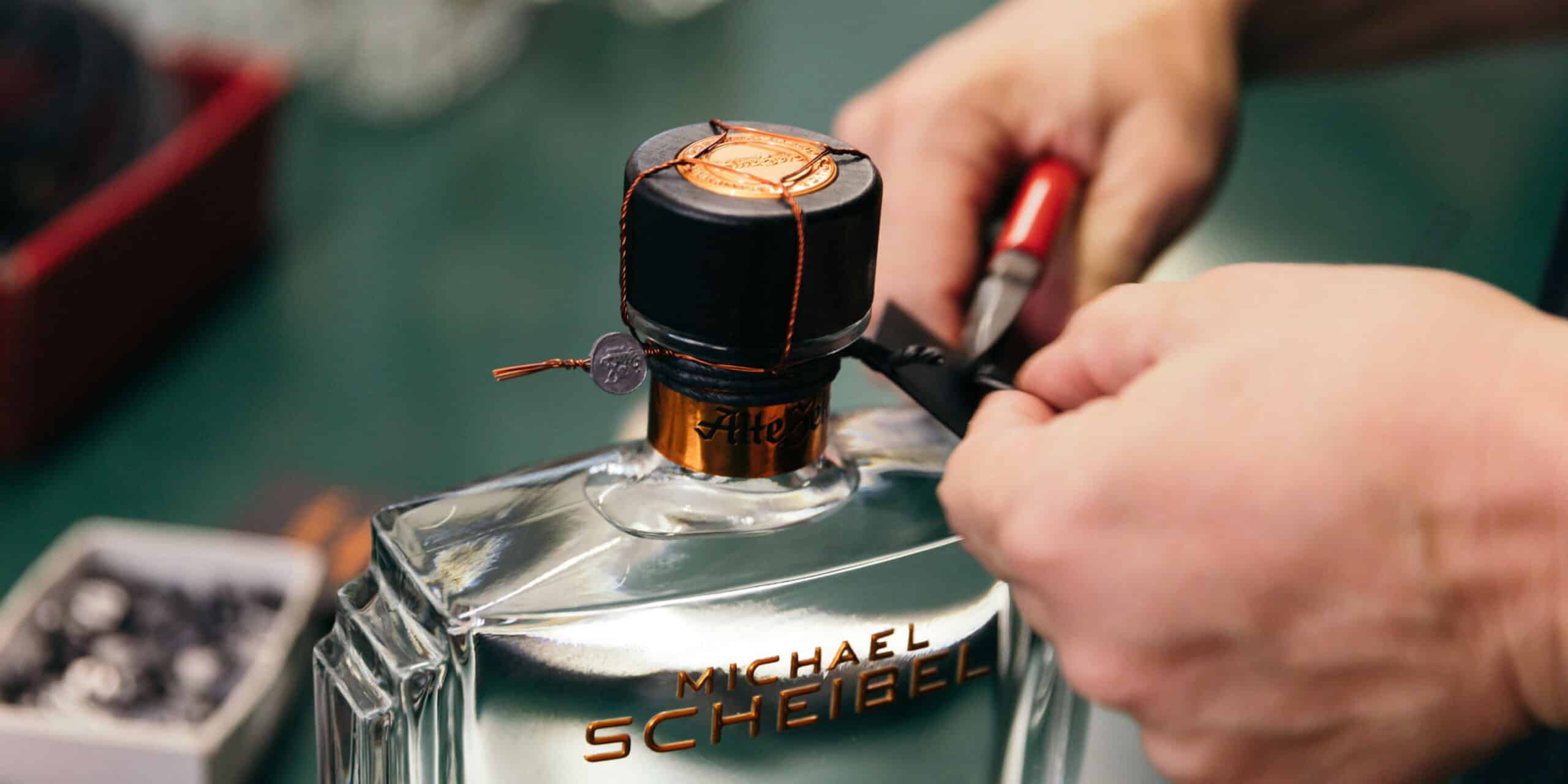
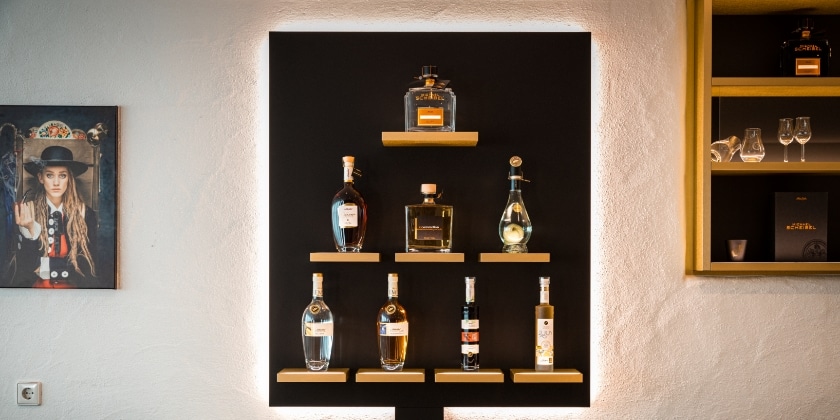
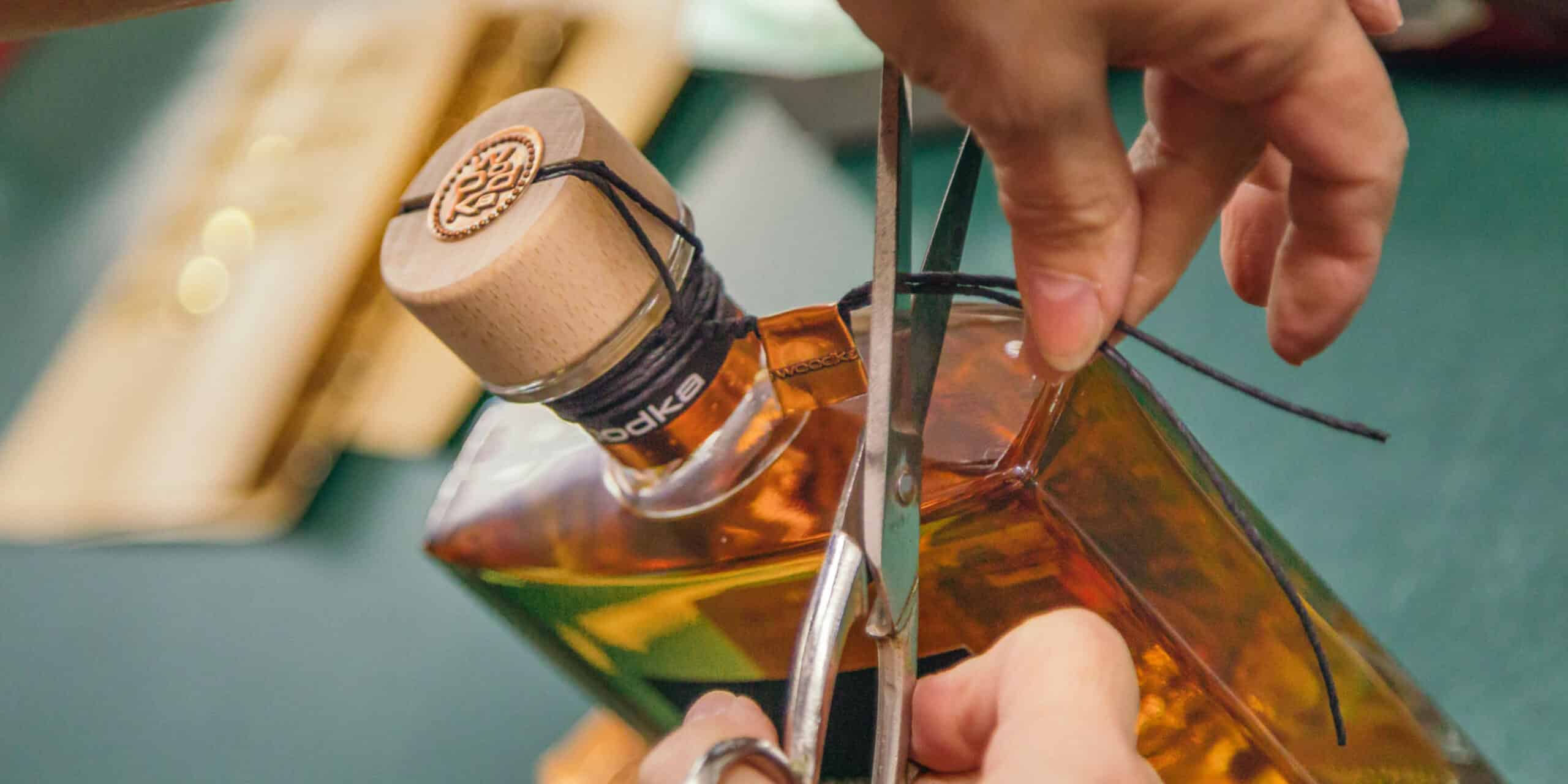
The love for the product, the time and the passion that we invest in the production of our distillates should be experienced by our customers with all their senses. The taste is of course crucial, but the right presentation also plays an important role for us. That's why we attach great importance to the presentation of our products - after all, you drink with your eyes. Many of our products, such as ALTE ZEIT, EDLES FASS 350 or EMILL, are still finished and bound by hand today. Special editions and limited edition products are also given the finishing touches by our employees in the assembly department. For many years we have therefore also been a member of the Association of German Manufactories (VDM).



Team leader bottling / production
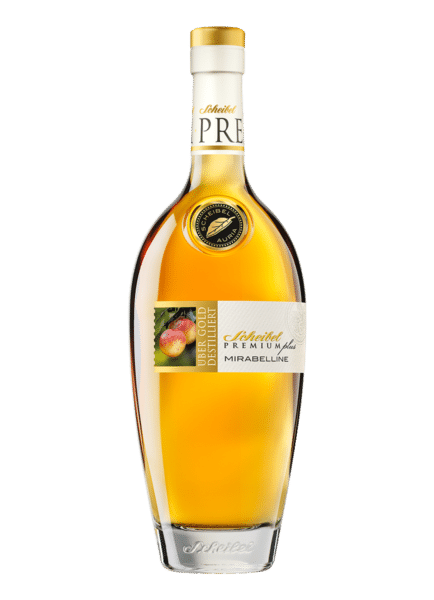
MY FAVORITE PRODUCTI prefer to enjoy the Premium Mirabell with a good snack - it's just perfect. After the meal, I like the Mirabelline - a little fruitier. It's now also a must with my friends - whether at a party, on a cozy evening or when we're sitting around the campfire in autumn.
I even use them in baking - especially when fresh mirabelle plums are available. For cakes, with preserved fruit or simply as a little extra for dessert.
Mirabelle plums were my favorite fruit even as a child - my grandmother often served semolina slices with preserved mirabelle plums. Maybe that's why it still tastes so good to me today. A brandy that is not only a pleasure for me, but also a piece of memory.
Filling / Production
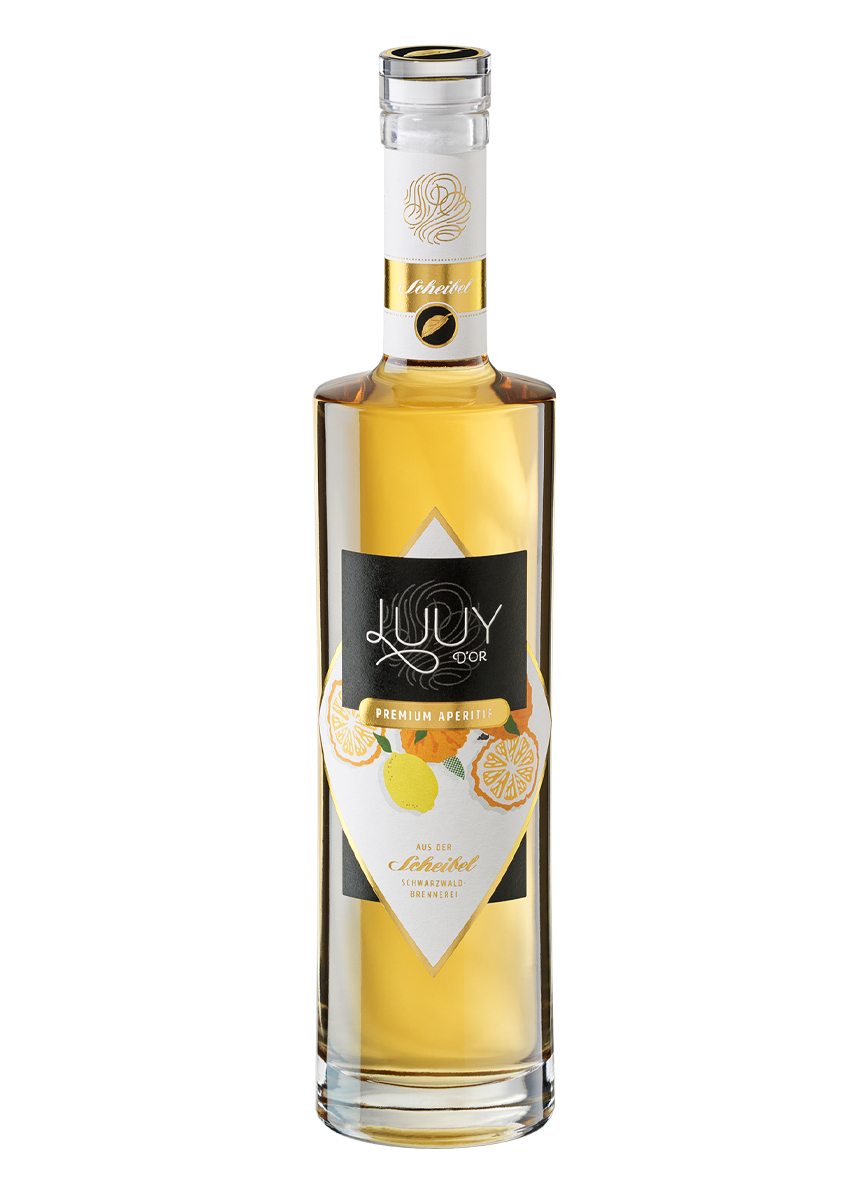
MY FAVORITE PRODUCTI appreciate the LUUY D'OR Premium Aperitif especially because of its refreshing and unusual combination of flavors. It's my first choice when I have visitors - served chilled with ice or as a summer spritzer, it's always a highlight. It's the perfect way to surprise guests as a welcome drink. I also particularly enjoy toasting with our friends from Bavaria via video chat. They love the LUUY just as much as I do and it brings a bit of togetherness to the group. I would recommend the LUUY at any time because it is simply something special. Its versatility and special taste make it a real pleasure to share.

Shipping / packing room
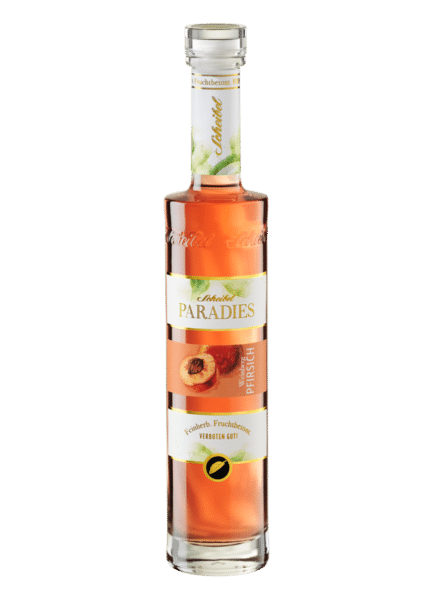
MY FAVORITE PRODUCTMy absolute favorite is the Paradies vineyard peach. The peach flavor comes through wonderfully - not too sweet, but just right. It is incredibly versatile, whether in a punch, with sparkling wine or simply on its own. Whatever the season, it always conjures up a little bit of summer in your glass. My favorite way to enjoy it is in a punch bowl when friends are visiting at the weekend, or in the evening with my husband in sparkling wine. I can highly recommend it, because its versatility and unique taste make it something very special.
Shipping / packing room
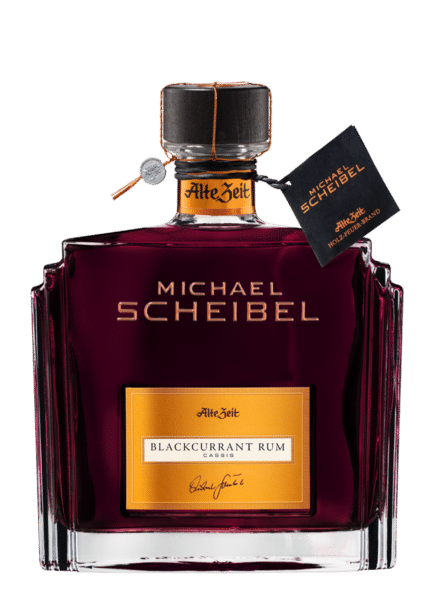
MY FAVORITE PRODUCTThe Blackcurrant Rum is exactly to my taste. The blackcurrant really comes into its own and the interplay of sweetness and acidity is simply perfectly balanced. This combination makes it something very special. In addition, the Alte Zeit bottle is a real eye-catcher, which makes it even more unique. I like to enjoy Blackcurrant Rum on special occasions, be it as a unique digestif at a wedding, a birthday or simply after a nice dinner on the terrace. For me, it is the ideal drink for women - elegant, fresh and full of flavor. I can only warmly recommend it; if you don't try it, you are really missing out. The redcurrant is at its best here.
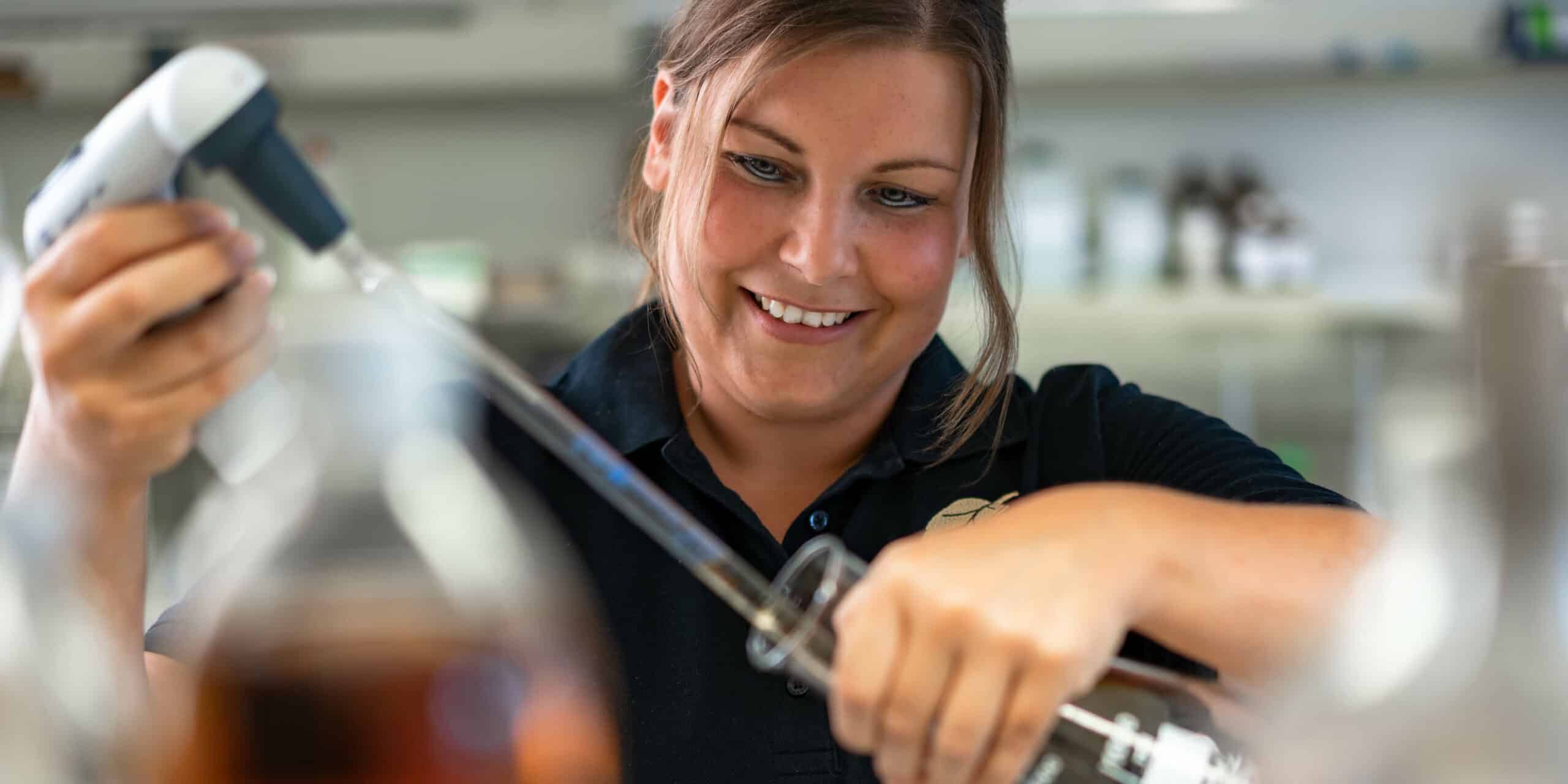
Time, quality and genuine craftsmanship are the cornerstones of our production at Scheibel. Every product is only as good as the raw materials we use. That is why we attach great importance to the quality of our raw materials. We find an abundance of wonderful and aromatic fruit in our region, which we prefer to source from the immediate vicinity. What is not grown regionally, we import from the best growing areas worldwide.
However, quality assurance goes even further. Every detail counts when it comes to guaranteeing the high quality of our brandies, spirits, liqueurs and whisky products. From the careful incoming goods inspection of the fresh fruit to the final product release, we pay attention to the highest standards. After all, the ultimate goal is always to create special moments of pleasure for our customers.

Proprietor
MY FAVORITE PRODUCTThe Black Wild Currant Brandy is my absolute favorite. The aroma alone is a promise - like a summer's day in the garden when the berries are fully ripe on the bush. Deep red on the nose, full of fruit, full of life. The blackcurrant dances on the palate - fruity, smooth and with a fine mildness that lingers for a long time. For me, a brandy for true connoisseurs - and for all those who love the real thing.

Quality management
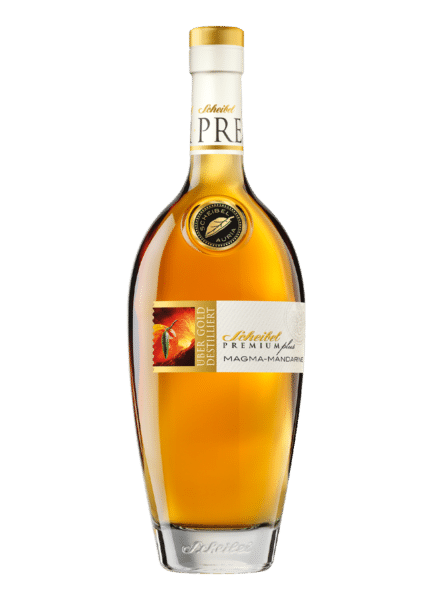
MY FAVORITE PRODUCTI really like citrus products in general. With the Magma mandarin gives you the feeling of having summer in a glass. It tastes fruity, sweet and sour with a slightly tart note. Magma mandarin is something special that not everyone has in their range. I enjoy this product on many occasions: after a great meal, on vacation at the beach or on a warm summer evening on the terrace. It is simply perfect at any time and in any season - a real all-rounder. I would recommend Magma Mandarin to anyone. If you like citrus products, you've found the perfect product here. And anyone who doesn't like citrus products will change their mind after a sip of Magma Mandarine. It's an explosion of flavor in a glass that makes you want more!

Quality management & purchasing
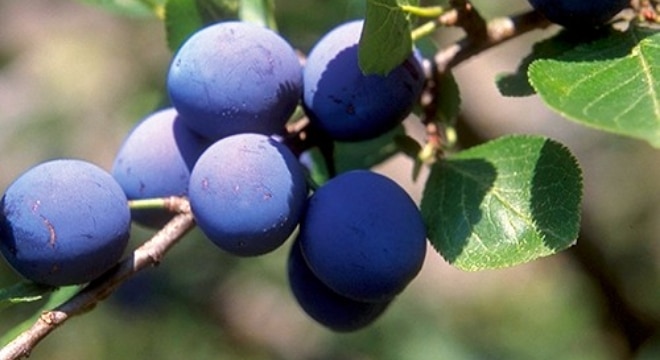
The wild plum has probably been around in this form since the Neolithic Age. Civet trees bloom snow-white and early in the year. The fruits, on the other hand, are harvested late, as they are at their best after the first frost. Distillers discovered their special qualities for distillation. Zibärtle brandy is tart and fruity with a hint of marzipan. The fruit for our Zibärtle from our 'Alte Zeit' collection comes from orchards in the Black Forest.
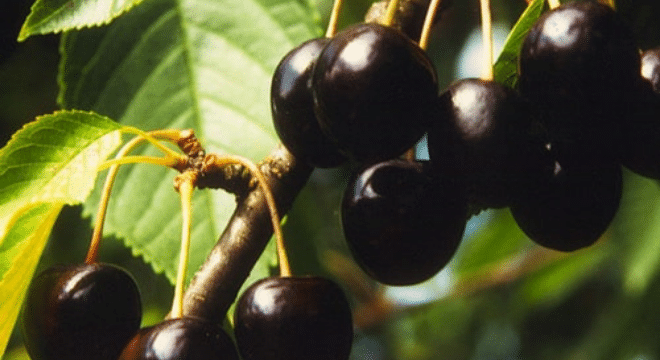
The black cherry originates from the Ortenau region. In the 1960s, people became aware of it and promoted its spread throughout the Black Forest. The tree itself is undemanding, not susceptible to frost and reliably produces a high yield year after year.
The fruit is easy to shake off the tree and the flesh separates easily from the stone. All of these uncomplicated characteristics are welcome additions to what makes the Dolleseppler cherry one of the most sought-after cherry varieties for the production of Black Forest kirsch: the aromatic, very juicy fruits have a slight almond note - a refinement that goes perfectly with fine brandies!
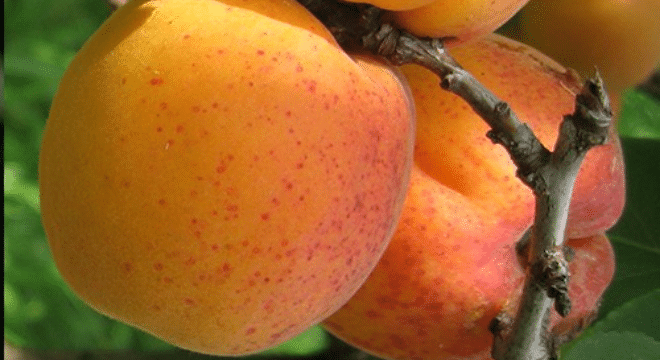
Apricots have been cultivated in their native northern China for over 5,000 years. It was from here that Alexander the Great brought the tree with the delicious fruit to the Mediterranean region, from where the Romans took it across the Alps. Apricots grow well in sandy soil and tolerate heat and drought. Our Fine Apricot, as well as the other apricot products from the various series, perfectly bring out the wonderful aromas of the fruit.
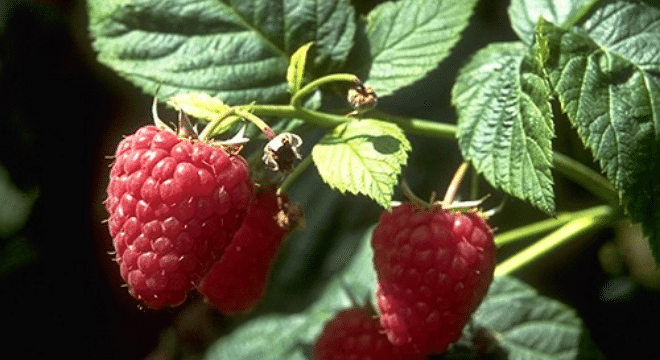
The raspberry has been known as a medicinal plant since ancient times. There are now many tasty varieties, but hardly any are as aromatic as the forest raspberry. The forest raspberries for the "Ghost Makers" come from the pristine nature of the largest contiguous forest area in Europe, the Carpathians. They are picked by hand and transported chilled to the Black Forest. A bottle of Wild Raspberry Brandy from our 'Alte Zeit' series contains up to 7 kg of these small fruits.
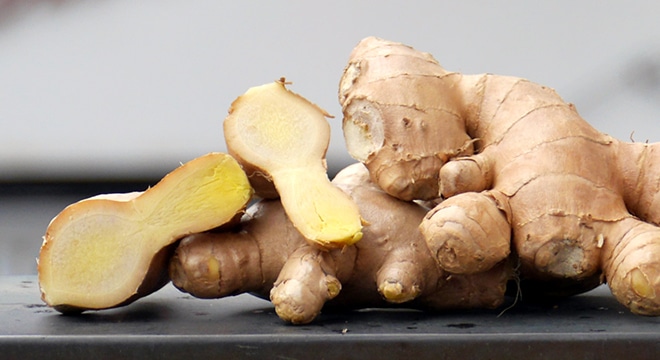
Ginger can be found all over the world. We deliberately chose a ginger from northern Thailand for our PREMIUMplus Ginger Royal spirit. The unique aroma of this variety, which we source from one of the most pristine regions of the Thai kingdom, comes out best in the distillate. An essential component of ginger is gingerol, an aromatic substance that gives ginger its slight spiciness, which can still be tasted in the distillate.


 Opening hours
Gold Distillery Monday-Friday: 8 am - 5 pm Saturday: 10 am - 1 pm Closed on Sundays & public holidays Scheibel Whisky Mill Friday: 1 pm - 5 pm Saturday: 10 am - 1 pm Closed on Sundays & public holidays
Please note special opening hours (start page)!